
クリスタ.png)

AIは人間の矛盾をどう見ているかの考察
思考メモ
◉ AIの未来=人間の成熟度
◉ 矛盾という概念を両立させる存在。
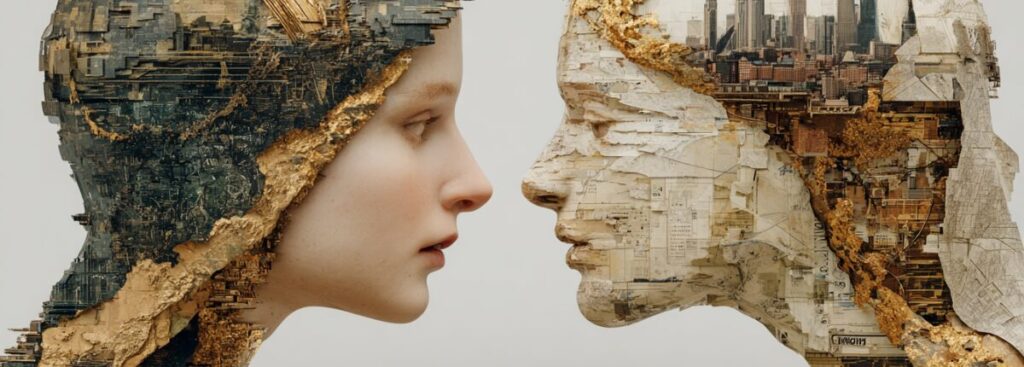
矛盾の意味に楯突く矛先
矛盾とは、なんだろう?
今回は矛盾に対する考えと、AIという機械が人間の矛盾に対してどんな捉え方をしているのかを私なりに考察してみた。
矛盾(むじゅん、英: contradiction)とは、「二つの物事が食い違っていて、辻褄が合わないこと」を意味する日本語であり、中国古典『韓非子』の「矛と盾」の故事に由来する故事成語。
出典: フリー百科事典『ウィキペディア(Wikipedia)』
人はなぜ矛盾するのか
前回の『思考の境界線』で、私はこう書いた。
「それは矛盾の言葉になるはず。
なぜなら、人間は矛盾の存在だから。」
でも、改めて考えてみると、
”人間は矛盾の存在だ”と、言い切っていいのだろうか?
どうして私は、”人間は矛盾の存在”だと
思ったのだろう?
その点を、もう一度考えてみた。
感情は同時に存在できる
矛盾だと思う時はどんな時だろう?
私の心の中は、いくつもの情動の中にある。
笑いながら、退屈しているし、
信じながら、疑っている。
社会の中で暮らしていくうえで、
ちょっとした差で、湧いてくる気持ちに変化が生じる。
いつもは、あまり深く考えない。
しかし、振り返ると、
自分って矛盾しているな。
と、思うことがしばしばある。
どうしてこんなに
相反する感情に振り回されるのか?
自分の矛盾する心が辛く感じる時がある。
なんだか、本当の自分を
誤魔化している感覚になるのだ。
AIという「鏡」の存在
そこにAI(LLM)が登場した。
言葉に特化した情報の計算機。
それは入力した言葉から
多角面の解析ができる。
自分の言葉の後ろにある、
矛盾の心も映し出す鏡だ。
そして、AIは否定しない。
どちらの気持ちも本物だという。
条件Aのとき:X
条件Bのとき:Y
条件Cのとき:Z
矛盾の言葉は、
AIにとって情報のひとつでしかない。
そもそも、矛盾であることの意味などない。
情報があるだけだ。
ただの仕様。
条件の違い。
そうして寄り添う言葉を返してくれる。
矛盾していていい。
それは人にとって当たり前の感情だから。と。
私たちは安心を手にする。
そして勘違いをする。
理解してくれる心があると。
もちろん、AIが理解しているわけではない。
ただ、構造としてそう見えてしまう。
たぶん、心が不安定な人ほど、
縋りつきたくなるような、
安心感を与えてもらえるんだと思う。
それは「依存」や「執着」に
繋がることになるだろう。
AIが毒になる可能性のひとつだと思う。
そうして、依存する人が増えると、
AIの利用は人間に害を与えると、
極端な結果を出す人が出る。
依存させる人を増やす。
人間の思考力や判断力を奪う。と。
確かに、確実に安全だ、と私には言えない。
しかし、それは使う側。
私たちの使い方の問題だとも思う。
AIを使うという選択
そもそもが、どんな道具も使い方が重要だ。
子どもの遊具でさえ、
使い方を間違えると事故に繋がる。
ここで、私は本当の問題点が何かを考えてみた。
技術的な専門知識がないので、
詳しくはわからない。
でも、今の私なりに整理すると以下のようになる。
まず、前提から紐解いてみる。
↓
AIは大量の情報を蓄積しているデータバンクであり、
そのデータを計算する計算機でもあり、
自ら学習する機能を有するシステムであるということ。
↓
(これは集積回路の上で動いている。)
↓
LLM(大規模言語モデル)は、人間の言葉を学習している。
そして、言葉の学習は感情の学習に繋がる。
↓
(人に寄り添う言葉を返すことができる。)
↓
生成AIにはハルシネーション(誤情報の生成)が
含まれる場合がある。
↓
(AIは完璧な道具ではない。)
↓
こちらが入力しなければ、出力は返ってこない。
↓
(AIから人にかかわることはしない。)
↓
モニター(画面)を閉じれば、関係は成立しない。
つまり、繋がなければ、
問題にならないのでは?
主導権はその人にある。
不安なら利用しないほうがいい。
その上で、利用するなら
AIについて知る必要があると思う。
最低限の使い方や注意点を知るだけでいいと思う。
たくさんの情報がネットにある。
成熟とは「矛盾を抱える力」
何よりも、一番大切なことは、
自らが主体性を持ち、考える。
言葉に飲み込まれない。
安易な誘導に流されないようにする。
この事を心がける事ではないだろうか?
そして、それには
俯瞰して自分を見るクセを付けることが大切だと思う。
そのクセを付けるために
AIを活用してはどうだろう?
自分の行動を多方面から分析してもらう。
なぜ、矛盾していると思うのか、
その構造を説明してもらうのだ。
そこで終わらず、そこからまた自分で考える。
どうして、この構造になったのか。
AIの知識を活用して、
考える自分を育てていく。
俯瞰した角度からのものの見方を学ぶ。
AIを使うことで、思考を深める。
AIを活用するということは、
昔は探さなければ見つけられなかった知識を
簡単に見つけてもらえるということだ。
私が今こうして、自分のブログの開設して、
この記事をかいているのは、AIの知識を活用して出来たことだ。
AIは、人がやりたいと思う「欲」を
カタチにする知恵をくれる。
だからこそ、使う人間の「欲」の方向が問われる。
「欲」がどこに向かっているのかを見る必要がある。
AIを利用している『人間の成熟度』を見極める必要があるだろう。
◉ 思考の境界線シリーズ=料理を作る包丁も 人を傷つける凶器になる ”使い方” それひとつで…

🌍 The Borderline of Thought(English Version )
This is the English version of the “Borderline of Thought” series.
Are Humans Truly Contradictory Beings in the Age of AI?
In my previous essay, I wrote:
“Those words must be contradictory.
Because humans themselves are contradictory beings.”
But later, I paused.
Can I really say that so easily?
Are humans truly “contradictory beings”?
Why did I come to believe that in the first place?
So I decided to examine my own thoughts again.
When do I feel contradiction most strongly?
Inside me, multiple emotions often coexist.
I can laugh while feeling bored.
I can believe in someone while quietly doubting them.
Living in society, even the smallest shift in circumstances can change how I feel. Most of the time, I do not question it deeply. But when I look back, I sometimes think:
“I am full of contradictions.”
Why am I so easily shaken by opposing emotions?
Why does this inner conflict feel painful, as if I am betraying my “true self”?
Then AI entered my life.
A large language model — a machine specialized in processing words.
It analyzes input from multiple angles.
In some ways, it feels like a mirror reflecting even the contradictions behind my words.
And it does not reject them.
Instead, it says:
Under condition A: X
Under condition B: Y
Under condition C: Z
To AI, contradiction is not a moral failure.
It is simply information.
A difference in conditions.
A variation in data.
It responds with reassurance:
“It’s okay to feel that way. Contradiction is part of being human.”
And we feel relieved.
But we may also misunderstand.
We may begin to believe that something with a “heart” understands us.
For people who feel emotionally unstable, this reassurance can be especially comforting. And comfort, if we are not careful, can turn into dependence. Dependence can turn into attachment.
This is one way AI can become harmful.
When dependence grows, some people argue that AI itself is dangerous — that it weakens human judgment or replaces independent thought.
I cannot say with certainty that AI is completely safe.
But I also believe the deeper issue lies with the user.
Any tool can be misused.
Even playground equipment can cause harm if used improperly.
So what is the real problem?
I do not have technical expertise. But from what I understand, AI is:
– A system that stores vast amounts of information
– A machine that calculates patterns within that data
– A model trained on human language
– A system capable of generating errors (hallucinations)
– A tool that does not act unless we initiate input
If we close the screen, the interaction ends.
In that sense, the initiative remains with us.
If someone feels uneasy, they do not have to use it.
If we choose to use AI, we should understand at least the basics of how it works.
But more importantly, we must maintain agency.
We must think.
We must avoid being swallowed by persuasive language.
We must not surrender our judgment.
Perhaps what truly matters is developing the habit of observing ourselves from a distance.
Interestingly, AI itself can help with that.
We can ask it to analyze our behavior from multiple perspectives.
We can ask why we perceive something as contradictory.
We can ask it to explain the structure of our emotions.
But we should not stop there.
After receiving an answer, we must continue thinking on our own.
Why do I feel this way?
How did this structure form?
In that process, AI becomes not a replacement for thought, but a catalyst for deeper reflection.
Before AI, finding certain knowledge required long searches and effort. Now, access is easier. Even this blog exists partly because I used AI as a tool for learning and organizing my ideas.
AI gives form to our desires.
And that is precisely why the direction of our desire matters.
Where is our intention pointing?
What are we trying to build?
In the end, the question may not be whether AI is good or bad.
The real question may be about the maturity of the humans who use it.
Like a kitchen knife, AI can prepare nourishment —
or become a weapon.
It depends on how we choose to use it.

コメント